

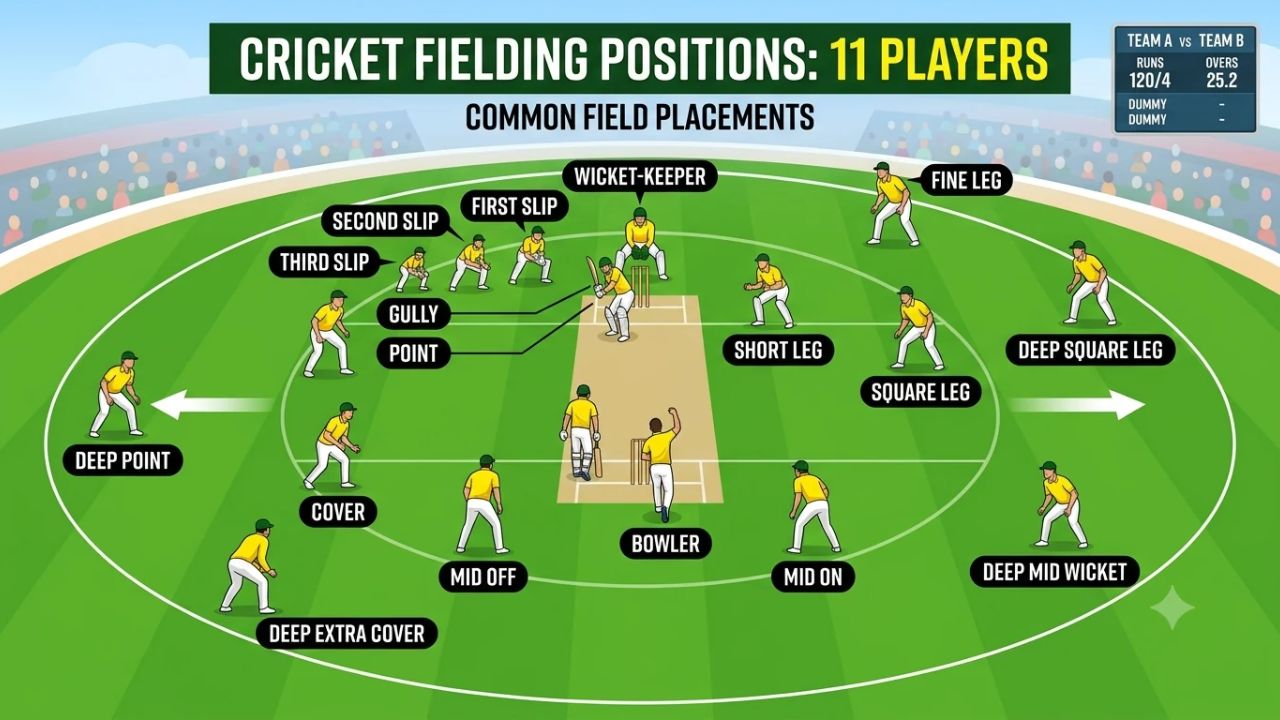
Cricket is a sport that requires all members of each team to work together in order to bat, bowl, and field. While there is a lot of focus placed on how well a player bats and bowls, fielding is also extremely important because it allows a team to prevent runs from being scored, catch hit balls, and ultimately help the team dismiss their opponents.
In cricket, it can be very difficult for beginners to know where to stand when fielding. This is because there are so many different positions that players can take on the field. The player’s position will depend on many factors including who is bowling, batting, the current state of the game and the captain’s overall strategy. Here are some of the most common positions that you would normally see during a cricket match: Slips, Gully, Point, Cover, Mid-Off, Mid-On, Square Leg, Fine Leg and Third Man.
There are 11 players in each cricket team, which includes a batsman, a bowler, and a wicketkeeper. Of the 11 players, only 9 may be positioned in the outfield while the bowler is bowling. The reason for this is because the batsman is located opposite to the bowler and the bowler is considered part of the fielding team.
This guide provides an explanation of the eleven different cricket fielding positions, including what they are called, how each position is used during a game of cricket, and how they relate to other positions on the field.
How Many Fielding Positions Are There in Cricket?
Cricket does not have a fixed number of fielding positions. Captains can place fielders in different areas according to the batter’s strengths, the bowler’s style, and the format of the game.
Some commonly used fielding positions include:
- Wicketkeeper
- First slip
- Second slip
- Third man
- Gully
- Point
- Cover
- Extra cover
- Mid-off
- Mid-on
- Midwicket
- Square leg
- Fine leg
- Long-on
- Long-off
- Deep cover
- Deep square leg
- Deep midwicket
These positions are not all occupied at the same time. A captain selects suitable positions depending on the bowling plan and match conditions.
Cricket Fielding Positions 11 Players: Complete List
Here are the major fielding positions in cricket and the responsibilities of players standing in each area.
1. Wicketkeeper
The wicket keeper is positioned in front of the stumps at the end of the pitch where the batsman hits the ball. He/she wears special protective gloves and gear to catch balls that go past the batsman.
The role of the wicketkeeper is crucial when it comes to taking the catches from edges, performing the stumpings and making the run-outs possible. A skilled wicketkeeper has the ability to turn around the outcome of a game with fast reflexes and accurate decision-making.
2. First Slip
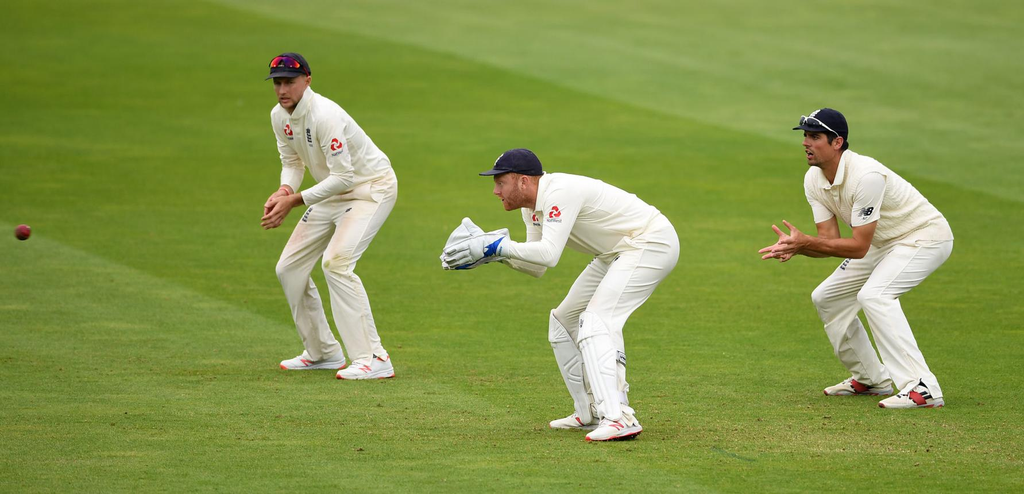
First slip is positioned next to the wicketkeeper on the off side. This player stands close enough to catch balls that take an edge from the batter’s bat.
Slip fielders are particularly important in Test cricket and other formats where fast bowlers and swing bowlers can create opportunities for catches.
3. Second Slip
The second slip position is located on the opposite side of the first slip and is further from the wicketkeeper than the first slip. This position is utilized when a bowler creates movement and there are increased chances for an edge.
A second slip fielder assists in catching balls that pass the first slip. Generally, captains will use more than one slip fielder when there is aggressive bowling.
4. Third Man
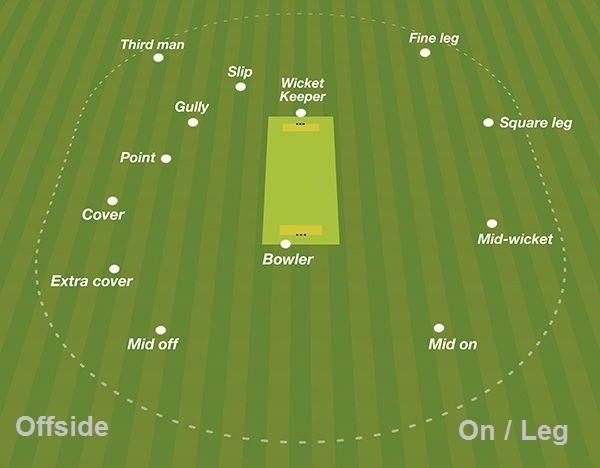
Third man is a position in cricket which is located in front of the slips on the off side of the field. Typically this position is found at the edge of the playing area. A third man will catch or stop any ball that travels past the wicketkeeper after it has been struck by the batsman’s bat.
In limited-overs cricket, the third-man position is of particular importance as it allows batters to utilize the speed of fast bowlers to direct the ball toward the third-man area.
5. Gully
The Gully is located to the right (off) of the wicketkeeper and is placed to the rear of the Point position. The Gully is generally positioned in close proximity to the Slips. Players who are in the Gully will catch balls that are hit wide of the Slips.
The role of a gully fielder is especially important when playing against quick bowlers that can produce both bounce and movement. To be an effective gully fielder you need to have great reflexes and the ability to make good catches.
6. Point
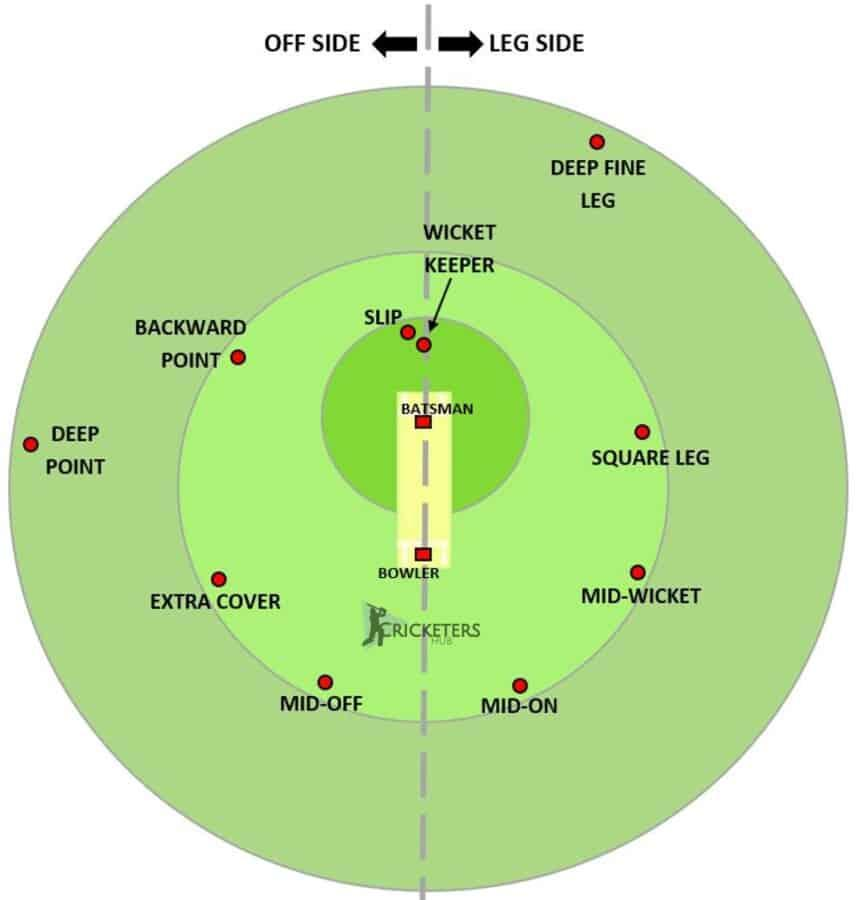
The point position is probably the single most common of all the cricket fielding positions. In this position, the fielder will be standing on the off side, typically directly perpendicular to the batsman.
The first role of the position known as “point” is to stop, or possibly catch, balls hit into the back-ward or square off-side regions. In addition, the point player stops batsmen from making fast runs.
Positioning of the point will vary, with some being positioned closer to the batter and others further away toward the boundary depending on the game situation.
7. Cover
The position of cover is located on the off side of the pitch, in-between point and mid-off. The purpose of this fielder’s placement is to protect the region of the field that is often used by batsmen to hit their “cover drive” shots and other aggressive strokes.
The fielder at “cover” requires a high level of anticipation, speed, and accuracy in throwing. This position is significant since a great majority of right handed batters will attempt to play their shots into the cover area.
8. Extra Cover
Extra Cover is situated between Cover and Mid Off, closer to Mid Off. This position provides protection against hard hit drives which may go through the wider Off Side area.
The extra cover fielder can be a very valuable asset for captains who want to limit the number of boundary hits and/or the ability of batters to score runs in single increments. This is particularly true if the batter has a tendency to hit the ball on the ground in a fast, aggressive manner.
9. Mid-Off
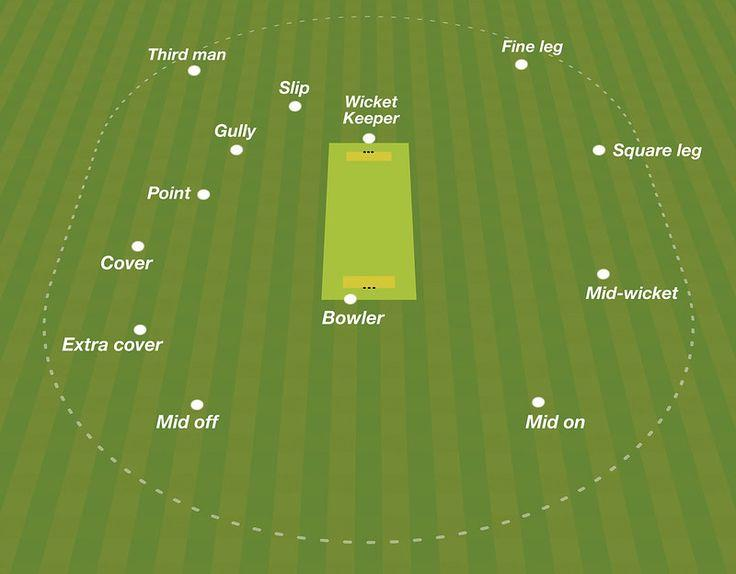
The position of “mid-off” is located on the right hand side (off-side) of the pitch and is fairly close to the bowler. The role of mid-off is to protect the area in front of the batsman that would allow him/her to hit the ball straight down the wicket or to the right of the wicket (off-side).
Mid-off has as its primary duty to prevent runs scored by the batsman driving on the off side of the pitch from the bowler. Additionally, this position can assist with preventing the batsman from taking quick singles, and supporting the bowler’s attacking field.
10. Mid-On
Mid-on can be found on the left (leg) side of the pitch, directly across from the bowler. This position is very similar to mid-off, however it is located on the opposite side of the pitch.
This player intercepts straight hits to the right (leg) side of the pitch to prevent batsmen from easily scoring runs. Against both fast and spin bowlers, mid-on is a standard placement for players on the field.
11. Midwicket
Midwicket is a fielding position located on the leg side, in front of the batsman, between mid-on and square-leg. Midwicket is responsible for protecting the areas of the field that are most often used by batsmen to hit flick shots, pull shots, and shots played “across the line.”
The location of this position is of great significance when playing against batsmen that tend to score their runs on the leg side. The fielder needs to be prepared to make strong defensive plays to stop powerful shots from going for boundaries.
12. Square Leg
The position of square leg is located on the leg-side, at a roughly right angle to the batsman. The primary role of this fielder is to cover the areas that are commonly used by batsmen when they hit pull shots, sweeps, and similar types of shots toward the leg-side.
The square-leg position is another key area that can help to prevent singles and assist the umpire during particular times. For example, in many matches, captains will have a deep square-leg fielder positioned at the boundary line in order to prevent large hits from going over the fence.
13. Fine Leg
Fine leg is positioned behind square leg on the leg side, closer to the boundary. This fielder protects the area behind the batter’s legs.
The position is useful for stopping glances, deflections, and fine leg-side shots. In T20 and ODI cricket, fine leg is frequently placed near the boundary to prevent four runs.
14. Long-On
Long-on is a deep fielding position on the leg side, close to the straight boundary. It is commonly used against aggressive batters who attempt to hit the ball over the bowler’s head towards the leg side.
The fielder needs strong catching ability and good throwing skills to stop boundaries and complete catches.
15. Long-Off
Long-off is positioned near the straight boundary on the off side. It protects the area where batters play lofted straight drives towards the off side.
Long-off is a common position in limited-overs cricket, particularly when batters are looking to score quickly by hitting the ball in the air.
16. Deep Cover
Deep cover stands near the boundary on the off side, behind the regular cover position.
The main responsibility is to stop powerful cover drives and lofted shots from reaching the boundary. This position is particularly useful in ODI and T20 matches.
17. Deep Square Leg
Deep square leg is positioned near the leg-side boundary, approximately square to the batter.
This fielder protects against pull shots, sweeps, and powerful leg-side hits. Deep square leg is frequently used against aggressive batters and spin bowlers.
18. Deep Midwicket
Deep midwicket is located near the leg-side boundary between deep square leg and long-on.
This position is important when a batter frequently plays slog shots and pulls towards the leg side. The fielder needs to cover a large area and be prepared to catch high balls.
Cricket Fielding Positions Diagram
A cricket fielding diagram helps beginners understand where players stand on the ground. The positions are divided into two main areas: the off side and the leg side.
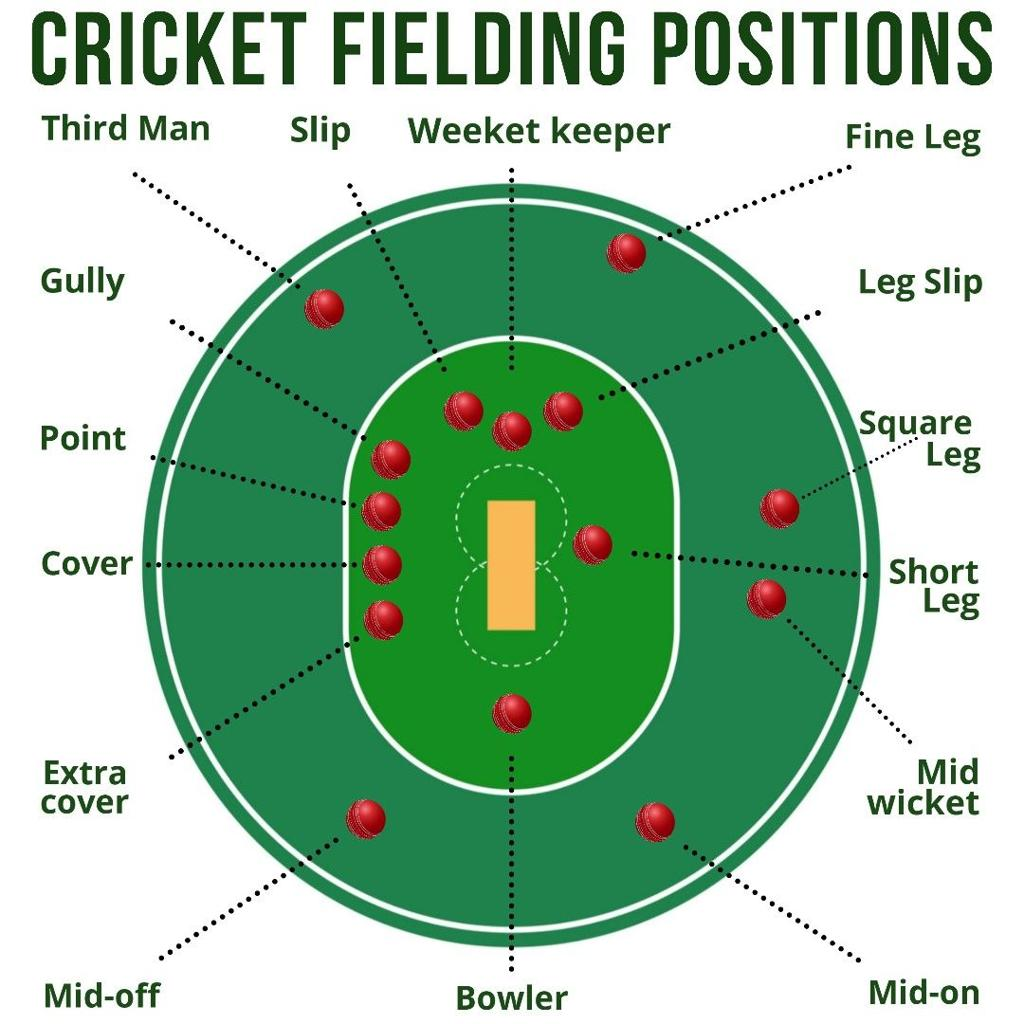
The off side is the area in front of the batter’s body when facing the bowler, while the leg side is the area behind the batter’s legs. These sides are determined by the batter’s stance.
For a right-handed batter, the off side is on the batter’s right and the leg side is on the batter’s left. For a left-handed batter, these sides are reversed.
Different Types of Cricket Fielding Positions
Fielding positions are generally grouped according to their distance from the batter and the area they protect.
Close-In Fielding Positions
Close-in fielders stand near the batter to catch edges, stop defensive shots, and create pressure. These positions are mostly used against spin bowlers and in attacking field settings.
Common close-in positions include:
- Silly point
- Silly mid-off
- Silly mid-on
- Short leg
- Leg slip
- Slip
- Gully
These fielders need quick reactions because the ball can travel towards them at high speed.
Inner-Circle Fielding Positions
Inner-circle fielders stand within the 30-yard circle in limited-overs cricket. Their main responsibility is to stop singles, prevent gaps, and put pressure on batters.
Common inner-circle positions include point, cover, extra cover, mid-off, mid-on, midwicket, and square leg.
These positions are particularly important during the powerplay overs of ODI and T20 matches.
Boundary Fielding Positions
Boundary fielders stand close to the boundary line to prevent the ball from reaching the boundary and to catch lofted shots.
Common boundary positions include:
- Third man
- Fine leg
- Deep square leg
- Deep midwicket
- Long-on
- Long-off
- Deep cover
These positions become especially important during the middle and death overs of limited-overs cricket.
How Are 11 Players Positioned in Cricket?
A cricket team has 11 players, but all 11 do not stand as fielders in separate positions.
During a normal delivery, the fielding team consists of:
| Player | Role |
| 1 | Bowler |
| 2 | Wicketkeeper |
| 3 | Slip fielder |
| 4 | Second slip or gully |
| 5 | Point fielder |
| 6 | Cover fielder |
| 7 | Mid-off fielder |
| 8 | Mid-on fielder |
| 9 | Midwicket fielder |
| 10 | Square leg fielder |
| 11 | Fine leg or boundary fielder |
This is only an example of a possible field setup. The captain can change these positions according to the bowling strategy and match conditions.
Remember that the bowler delivers the ball and is not counted as one of the nine other fielders. The wicketkeeper is also a member of the fielding team.
Difference Between Off Side and Leg Side in Cricket
Understanding the difference between the off side and leg side is important for learning cricket fielding positions.
| Off-Side Positions | Leg-Side Positions |
| Slip | Fine leg |
| Third man | Square leg |
| Gully | Short leg |
| Point | Midwicket |
| Cover | Deep midwicket |
| Extra cover | Mid-on |
| Mid-off | Long-on |
| Long-off | Deep square leg |
The off side and leg side change according to whether the batter is right-handed or left-handed. This is why fielders may move to different areas when a new batter comes to the crease.
Fielding Positions According to Different Cricket Formats
Fielding strategies can change significantly depending on the format of the game.
Test Cricket
Test cricket allows captains to use attacking field settings because the game lasts up to five days. Slip, second slip, third slip, gully, short leg, and silly point are commonly used to create catching opportunities.
The main objective is to dismiss batters rather than simply prevent boundaries.
One Day International (ODI) Cricket
In ODI cricket, captains balance attacking and defensive field settings. During the powerplay, fielders are positioned to stop boundaries and create wicket-taking opportunities.
During the middle overs, teams focus on controlling the scoring rate. In the final overs, deep cover, long-off, long-on, deep midwicket, and fine leg become important positions.
T20 Cricket
T20 cricket is an aggressive format in which batters frequently attempt big shots. Captains often place fielders near the boundary to stop sixes and fours.
Positions such as deep midwicket, long-on, long-off, deep square leg, third man, and fine leg are commonly used. However, attacking positions such as slip and short third man can also be used depending on the bowler and batter.
What Is the Most Important Fielding Position in Cricket?
There is no single most important fielding position in cricket because every position has a different responsibility.
However, some positions have a particularly significant impact on the game.
Wicketkeeper: The wicketkeeper is important for catching edges, completing stumpings, and supporting the bowlers.
Slip: Slip fielders are important for taking catches when the ball edges the bat.
Point: Point helps prevent singles and boundaries through the off side.
Midwicket: This position is useful for controlling leg-side shots and stopping aggressive batters.
Long-On and Long-Off: These positions are important for catching lofted shots and preventing boundaries.
The importance of a particular position depends on the batter, bowler, pitch conditions, and match situation.
Conclusion
The positions that cricket players take when they are out on the field will greatly affect their team’s performance. Each position has a particular job to do such as catching balls off the edge of the bat, preventing runs from being scored at the boundary, stopping single runs from being scored and helping the bowler.
When you understand the roles of each of the 11 players in cricket and where they are typically positioned on the field (wicketkeeper, slip, point, cover, midwicket, long-on, fine leg etc.), you can better appreciate the game as a whole and the captain’s overall game plan. All 11 players contribute to the success or failure of their team.
These positions can be used by beginners to learn about the sport, as well as players who want to become more familiar with the mechanics of the game.
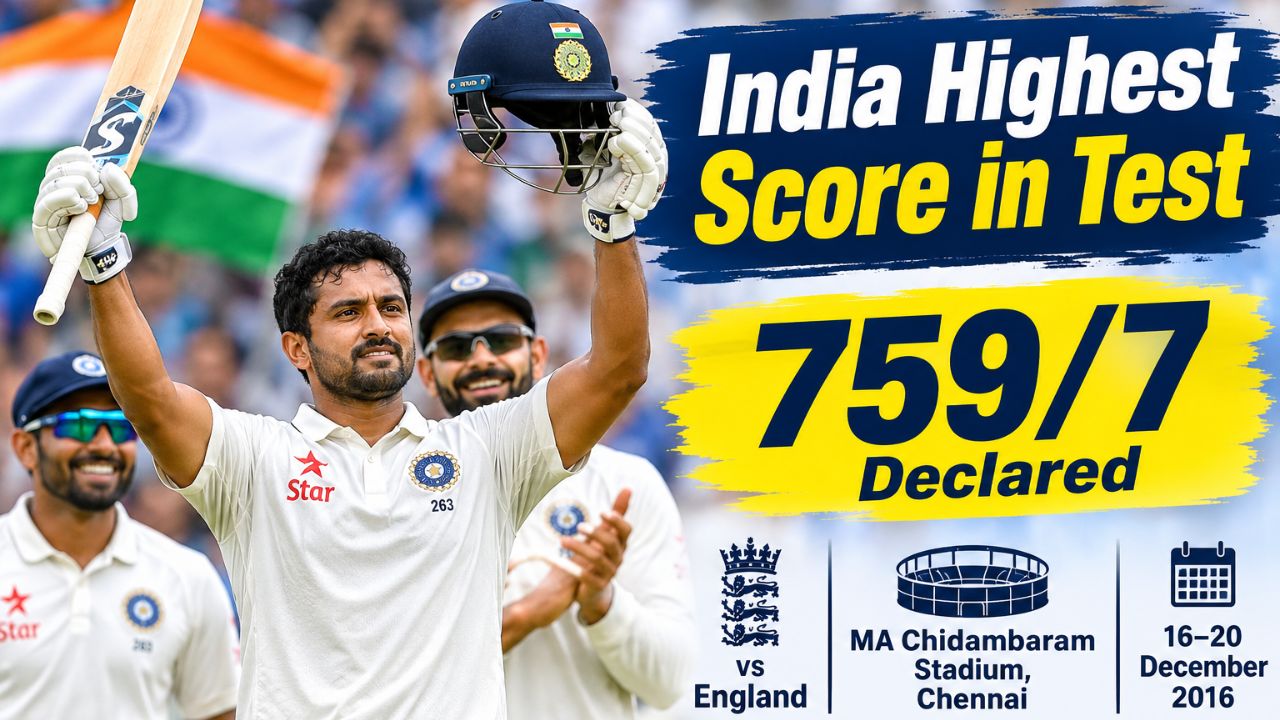
Read Also: Who Is the Best Cricketer in India || India Highest Score in Test Cricket || Most Runs in International Cricket in All Formats
FAQs
1. How many fielding positions are there in cricket?
There is no fixed number of fielding positions in cricket. However, there are more than 30 recognised positions that captains can use depending on the match situation and bowling strategy.
2. What are the 11 players’ positions in cricket?
A cricket team has 11 players, including the bowler, wicketkeeper, and nine other fielders. Their positions can include slip, gully, point, cover, mid-off, mid-on, midwicket, square leg, and fine leg.
3. What is the difference between off side and leg side?
The off side is the area in front of the batter’s body, while the leg side is the area behind the batter’s legs. Their locations change depending on whether the batter is right-handed or left-handed.
4. What is the role of a wicketkeeper in cricket?
The wicketkeeper stands behind the stumps and catches deliveries that pass the batter. The player also completes stumpings, supports run-outs, and communicates with the bowler and captain.
5. What is the slip position in cricket?
Slip is a catching position located beside the wicketkeeper on the off side. Slip fielders attempt to catch balls that take an edge from the batter’s bat.









Leave a Reply